Energy waste at a loading dock is quiet but costly. In Philadelphia, warehouses near PhilaPort, the Navy Yard, and Northeast industrial parks feel it fast. Torn dock seals, crushed foam pads, and loose shelters leak heated or cooled air every hour a bay runs. During a price spike, that loss punishes margins. Replacing worn dock seals and shelters cuts infiltration, stabilizes temperatures, and reduces strain on HVAC systems. It also helps crews load faster and safer.
Why seals and shelters become an urgent line item
High-cycle docks in Philadelphia handle frequent trailers. Foam pads take a hit from off-center trucks. Curtains tear on sharp trailer corners. Winter salt and summer UV degrade vinyl. Forklift traffic pulls at side curtains. After 12 to 36 months in heavy use, gaps open. The first signs are simple: doors sweat in summer, heaters run longer in winter, and there is a steady draft across the loading bay.
Facilities near the South Philadelphia Food Distribution Center and the 19154 corridor see these symptoms more due to round-the-clock schedules. Cold storage and pharma sites closer to Philadelphia International Airport (PHL) feel the energy swing even harder. A small half-inch gap around a trailer can add several tons of annual cooling or heating load.
Signs a replacement will pay back quickly
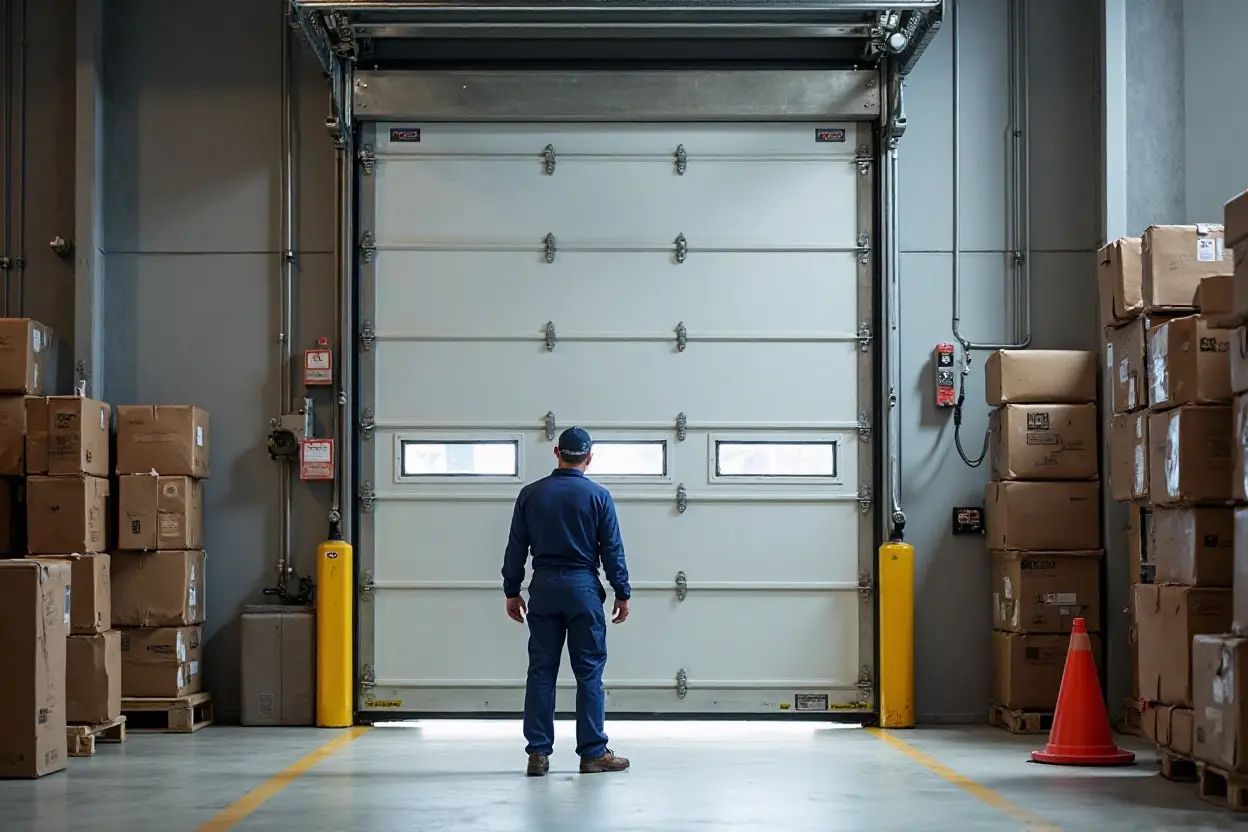
A quick flashlight check around a sealed trailer tells a clear story. Light leaks equal air leaks. If the foam no longer rebounds, or if curtains hang loose, the seal is done. Look at the dock bumpers too. Excess compression lets trailers press past safe lines and crush pads. Watch for wet floors from wind-driven rain, visible daylight at the header, or frost build-up on interior walls near the dock door. If staff report exhaust odors drifting inside, the perimeter isn’t sealing.
In Philadelphia County, common triggers for a full replacement include seasonal ramp-ups, new fleet trailer heights, and damage from tight urban approaches in Port Richmond or Bridesburg. Fuel and electricity spikes make the math simple: sealing the perimeter is often the cheapest “HVAC upgrade” available.
Seals vs. shelters: picking the right perimeter for your dock
A seal compresses foam pads against the trailer to close tight around the sides and top. It suits standard trailer sizes and minimizes air exchange. A shelter creates a flexible, canopy-like frame that lets a wider variety of vehicles back in without heavy compression. It suits mixed fleets, liftgate trucks, and overseas containers that hit the Port of Philadelphia.
Here is how local facilities choose between them:
- High-turn standard trailers in 19137 and 19154: insulated foam dock seals with wear pleats and reinforced corners. Mixed fleet near PHL and the Navy Yard: dock shelters with abrasion-resistant vinyl and adjustable head curtains. Cold storage or pharma in Southwest Philadelphia: hybrid systems with foam core side pads and a shelter-style head curtain to reduce turbulence at the header. Heavily exposed docks near the Delaware River: shelters with rain-diverting hoods and drip guards to keep interiors dry.
Material and feature choices that last in Philly conditions
Vinyl weight matters. A 40–60 oz. vinyl cover resists tearing on sharp trailer edges. Replaceable wear pleats extend life at high-contact zones. Closed-cell foam resists water absorption, which limits winter freeze issues. For shelters, flexible fiberglass framing maintains shape in wind. Add bottom brush seals and weatherstripping at the door threshold to block debris and rodents. For impact-prone sites, steel face plates or slick wear faces let trailers slide without grabbing and ripping.
For better climate control, insulated sectional doors from Overhead Door can pair with new seals to hold temperature. High-speed roll-up doors from Rytec reduce open-time loss between turns. Many Philadelphia facilities cut air exchange by 20–40% when combining a well-tuned door with a fresh, tight perimeter.
How seal and shelter replacements connect to dock door performance
A good perimeter reveals weak links. Crews often find misaligned vertical tracks, worn rollers, or a dock leveler that fails to sit flush, leaving a wedge-shaped gap under the door. A-24 Hour Door National Inc. checks the system as one unit: the door, the leveler, the bumpers, the vehicle restraints, and the sealing interface.
Typical corrective actions include replacing frayed lift cables, high-cycle torsion springs, and worn commercial dock doors repair hinges on sectional doors. For levelers, technicians service hydraulic power units, replace lip assist springs on mechanical models, and tune control panels so the platform extends fully under load. These small fixes help the new seals do their job.
A Philadelphia-focused approach to dock efficiency
Facilities near the Benjamin Franklin Bridge and in Kensington deal with tight alley approaches and side-street angles. That means side pads take shearing forces and corners rip sooner. Northeast Philadelphia parks face crosswinds across open lots. Shelters need stronger returns and deeper projections. At PhilaPort, container heights vary, so adjustable head curtains protect the gap above non-standard trailers.
Local knowledge matters:
- Rapid emergency service is available for industrial facilities in zip codes 19137 and 19154. Teams are positioned close to PhilaPort and the South Philadelphia Food Distribution Center for same-day dispatch. Priority maintenance is available for warehouses in Northeast Philly and Port Richmond where cycle counts peak.
What a replacement visit includes
A-24 Hour Door National Inc. measures door width, door height, dock height, and bumper projection. The tech records trailer mix, approach angle, and target compression. If vehicle restraints are present, they confirm the engagement point so seals do not interfere. The crew checks dock bumpers, weatherstripping, bottom brush seals, and door balance. If the dock leveler sits low, they correct it before seal installation to prevent uneven wear.
Installations take a few hours per opening in standard conditions. High-traffic bays schedule in off-peak windows. Crews remove failed components, repair backing boards, set anchors, and align pads or frames to the trailer stop line. They test with a live trailer to verify uniform contact at the header and sides.
Brand support and parts on hand
The company services Kelley, Serco, and Rite-Hite dock equipment across Philadelphia. It supports Rytec high-speed doors, Cornell rolling steel shutters, and Overhead Door, Amarr, Clopay, Wayne Dalton, Haas sectional systems. Stock on trucks covers common widths, corner wear pleats, header curtain kits, dock bumpers, vehicle restraint components, and control panel parts. That reduces return trips and shortens downtime.
Energy impact and payback
Simple math helps decision-makers. A single leaky bay can waste thousands of dollars per year in HVAC energy, depending on interior setpoints and run-time. Seals and shelters cut infiltration immediately. Many facilities see payback inside one to three heating or cooling seasons, faster in cold storage or high-cycle operations. The side benefit is comfort. Teams report less sweat in summer and fewer cold drafts in winter, which supports productivity and safety.
Integration with door and leveler repair services
During a seal project, A-24 Hour Door National Inc. can address dock doors repair Philadelphia requests in one visit. The crew replaces damaged sectional panels, aligns tracks, swaps door rollers, and secures hinges. They repair hydraulic and mechanical dock levelers, install heavy-duty dock bumpers, and service vehicle restraints. For rolling steel doors, they replace torsion springs, cables, and drums, and address control panel faults. This bundled approach minimizes downtime and cuts repeat service calls.
Common problems that pair with seal failures
Frequent issues include stuck dock doors from broken torsion springs, grinding noises from worn rollers, sensors that fail to detect obstructions, and dock levelers that do not extend or float under load. Torn dock seals usually show up alongside damaged panels or misaligned tracks, especially in tight urban sites from Northern Liberties to Packer Park. Fix the mechanics, set the leveler, then fit the new perimeter. That sequence protects the investment.
Safety, compliance, and documentation
AAADM-certified technicians complete work to OSHA guidelines. Lockout/tagout is standard during spring, cable, and leveler service. The company documents adjustments, parts replaced, and recommended maintenance intervals. For facilities with audits, records include model numbers, torque settings on springs, and pressure checks on hydraulics where applicable.
Quick buyer’s checklist for Philly facilities
- Confirm trailer mix, bumper projection, and approach angle before selecting a seal or shelter. Choose heavy-wear vinyl and replaceable pleats for high-cycle doors in 19134, 19137, and 19154. Pair perimeter upgrades with door weatherstripping, bottom brush seals, and intact dock bumpers. Service the leveler so it sits flush; an uneven deck chews through new seals. Schedule a post-install review during peak hours to confirm contact with live trailers.
Service coverage and response
Mobile teams cover Philadelphia and nearby corridors: Bensalem, Upper Darby, King of Prussia, Conshohocken, Camden, Cherry Hill, and Chester. Same-day diagnostic visits are common near the Navy Yard, Southwest Philadelphia, and facilities along the Delaware River. True 24/7/365 emergency repair is available across Philadelphia County.
Why facilities choose A-24 Hour Door National Inc.
The company brings 30+ years of industrial door experience, same-day dispatch, and preventative maintenance plans that fit high-cycle docks. It replaces frayed lift cables and high-cycle torsion springs, repairs misaligned vertical tracks, and restores hydraulic and mechanical levelers. It specializes in Rytec high-speed doors and fire-rated industrial shutters. Authorized service and parts are available for Kelley, Serco, and Rite-Hite equipment. The goal is simple: tighter docks, smoother turns, and lower energy spend during price spikes.
Ready to stop the air leaks and fix the dock? Call for a same-day diagnostic visit and a clear repair quote. A-24 Hour Door National Inc. stands within easy reach of PhilaPort, PHL, and the major warehouse zones across Philadelphia.
A-24 Hour Door National Inc provides fire-rated door installation and repair in Philadelphia, PA. Our team handles automatic entrances, aluminum storefront doors, hollow metal, steel, and wood fire doors for commercial and residential properties. We also service garage sectional doors, rolling steel doors, and security gates. Service trucks are ready 24/7, including weekends and holidays, to supply, install, and repair all types of doors with minimal downtime. Each job focuses on code compliance, reliability, and lasting performance for local businesses and property owners.
A-24 Hour Door National Inc
6835 Greenway Ave
Philadelphia,
PA
19142,
USA
Phone: (215) 654-9550
Website: a24hour.biz, 24 Hour Door Service PA
Social Media: Instagram, Yelp, LinkedIn
Map: Google Maps